Showing posts with label food. Show all posts

Wednesday, April 27, 2011

Hairballs!

Friday, April 29, is National Hair ball Awareness Day!

What better way to spread the word than by coughing up a virtual hairball on all your Facebook friends?

If you’re a cat owner, you’ve surely fallen victim to a hairball attack. There’s nothing worse than discovering that little present from your pet in the middle of the night in your bare feet. National Hairball Awareness Day provides a platform for highlighting this issue and educating cat owners of the solutions Science Diet offers.

You can help spread the word for Hill's Hairball Control products by playing and passing on Hill’s Pet Nutrition’s very first Facebook game—Hairball Battle!


Playing the game is simple. Choose one of the hilarious hairballs and cough them up on your friends! But watch out, they’ll be able to retaliate! Silly, sloppy and a bit disgusting—it’s the most fun friends of felines can have without leaving Facebook!

Play the game by clicking the Battle link below. Then fight to the yucky finish. Watch your step!

http://apps.facebook.com/hairball_battle

P.S. Dog lovers, don’t be shy—you can play, too!

Seriously, if you would like more information about hairballs and hairball control, please visit Hill's® Science Diet® Hairball Control Formulas.
READ MORE - Hairballs!

Tuesday, March 22, 2011

Bacon Biscotti (for Dogs!)

Bacon Biscotti (for Dogs!)

6 slices bacon, chopped
canola or olive oil (optional)
1 1/2 cups (375 mL) flour
1 1/2 cups (375 mL) whole wheat flour
1 cup (250 mL) oats
1 tsp. (5 mL) baking powder
1/2 cup (125 mL) water
2 large eggs
1/4 cup (60 mL) bacon drippings or canola oil
2 Tbsp. (30 mL) honey

Preheat oven to 350°F.

In a skillet set over medium-high heat, cook the bacon until crisp; remove with a slotted spoon and set aside, reserving the drippings. Pour the drippings into a measuring cup; if you need to, add canola or olive oil until you have 1/4 cup. (If you like, discard the bacon drippings entirely and just use oil.)

In a large bowl, combine the flours, oats and baking powder. In a small bowl, stir together the water, eggs, bacon drippings and/or oil, and honey; add to the dry ingredients along with the cooked and crumbled bacon and stir until blended.

Shape the dough into a log that is about 12” long, place on an ungreased baking sheet and flatten until it’s about 6” wide. If you like, brush the top with a little beaten egg to give it a shiny finish. Bake for about 30 minutes, until firm.

Reduce the oven temperature to 250° F. Cool the log and cut it on a slight diagonal into 1/2” -1” thick slices using a sharp, serrated knife. Place the biscotti upright on the baking sheet, keeping them spaced about 1/2” apart, and put them back into the oven for another half an hour. If you want them hard, turn the oven off but leave them inside to harden as the oven cools.

Makes about 1 1/2 dozen biscotti. Store in a tightly covered container in the fridge, or freeze.

Source
READ MORE - Bacon Biscotti (for Dogs!)

Wednesday, February 23, 2011

Edible Giant Toasted Leafcutter Ants

Yummy!

A delicacy in many parts of Northern South America, these ants - the largest type of leafcutter ant in the world - are thought to be aphrodisiacs, and are therefore quite a common wedding gift.

They also make a nice snack, which is why ThinkGeek is selling Giant Toasted Leafcutter Ants.


(via The Presurfer)
READ MORE - Edible Giant Toasted Leafcutter Ants

Wednesday, January 19, 2011

Dogs Were Man's Best Friend Even 9,400 Years Ago

PORTLAND, Maine -- Nearly 10,000 years ago, man's best friend provided protection and companionship - and an occasional meal.

That's what researchers are saying after finding a bone fragment from what they are calling the earliest confirmed domesticated dog in the Americas.

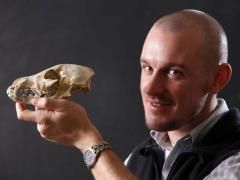
University of Maine graduate student Samuel Belknap III came across the fragment while analyzing a dried-out sample of human waste unearthed in southwest Texas in the 1970s. A carbon-dating test put the age of the bone at 9,400 years, and a DNA analysis confirmed it came from a dog - not a wolf, coyote or fox, Belknap said.

Because it was found deep inside a pile of human excrement and was the characteristic orange-brown color that bone turns when it has passed through the digestive tract, the fragment provides the earliest direct evidence that dogs - besides being used for company, security and hunting - were eaten by humans and may even have been bred as a food source, he said.

Source
READ MORE - Dogs Were Man's Best Friend Even 9,400 Years Ago

Monday, January 10, 2011

Scary pork?

In a small complex of nondescript barns set in the flat, snow-covered fields of Ontario, Enviropig is a scientific project which, some argue, represents the new frontier of a technology that could benefit millions of people around the world.

For others what is happening here is weird, dangerous science.

The pigs they are breeding could be among the first genetically modified farm animal to be approved for human consumption.Each pig contains genes from mice and E.coli bacteria, which have been inserted into their DNA with absolute precision.

Those genes make a small but important difference to the way these pigs process their food.

Ordinarily, pigs cannot easily digest chemicals called phosphates. That means that the stuff that comes out of the back end can be toxic and damaging to the environment. The phosphates are easily washed into waterways, where they can produce a hugely fertile environment for plants. But the plants grow so rapidly that they choke the stream or river and cause huge damage to the ecosystem.

The genetic modification enables these pigs to digest phosphates, which means they are less polluting and cheaper to feed.

Source
READ MORE - Scary pork?

Tuesday, November 16, 2010

Look out, Rudolph!

UK supermarket Lidl is under fire for stocking reindeer meat and is accused of destroying the magic of Christmas.

Story includes a recipe for reindeer stew if you're interested.

Source
READ MORE - Look out, Rudolph!

Monday, July 6, 2009

Ready for lunch?

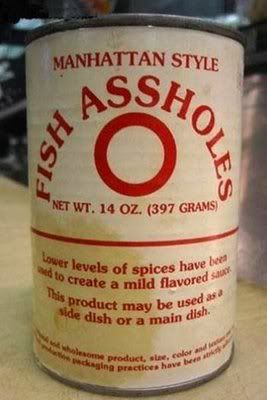
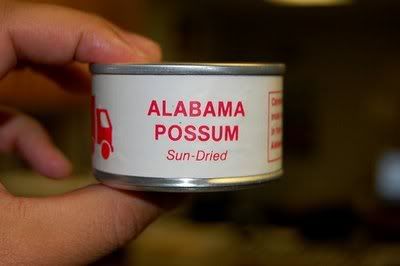
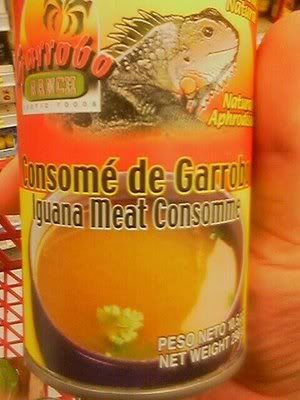
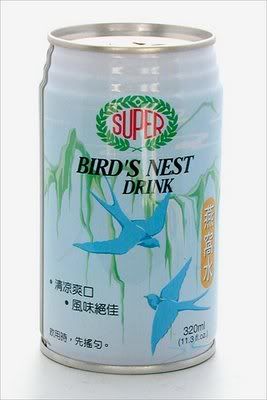
Now That's Nifty has gathered some canned food items and prepared a picnic lunch for us.

So, if you're ready, let's eat!


READ MORE - Ready for lunch?

Monday, April 13, 2009

Sunday, April 12, 2009

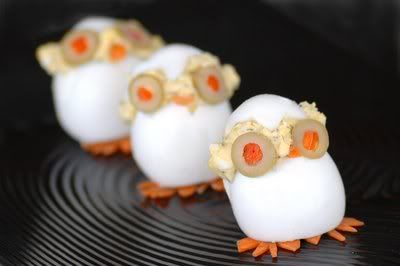
Happy Easter!

from Flickr, by Bakerella

(via Bakerella)
READ MORE - Happy Easter!

Wednesday, April 1, 2009

Relax, it's just foie gras

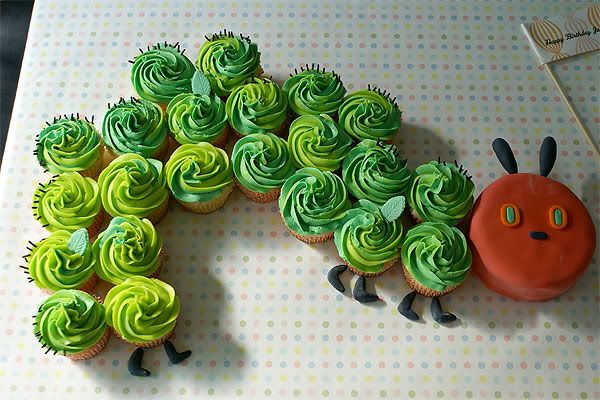
Whatever else you want to say about it, at least acknowledge this: Foie gras, the fattened liver of a duck or goose, is truly, indisputably, delicious. Roasted whole, pan-seared, combined with brandy and turned into a pâté, the stuff just tastes good.

If you oppose foie gras, even if the only thing you've ever done about it is to make a dinner companion feel guilty, and you still eat conventionally raised meat, you're a raging hypocrite and a silly one at that.

The eggs you ate for breakfast, the cheese that came on top, and the bacon on the side, all of it is produced using methods more torturous than the ones employed on a good foie gras farm.

Animals on a typical farm these days are confined in spaces so small they can't turn around, much less do any of the things they'd normally do in nature. And in order to keep them at least somewhat healthy and functional despite those conditions, which tend to make them stressed and unhappy, their bodies are altered to keep them from harming themselves and their fellow animals -- chickens have their beaks trimmed, pigs and cows get their tails docked.

In his book, Foie Gras Wars: How a 5,000-Year-Old Delicacy Inspired the World's Fiercest Food Fight, Mark Caro states that foi gras opposition is not, ultimately, about foie gras at all. They're being waged by vegans who believe that all meat eating inevitably involves torture but who are smart enough -- and disingenuous enough -- to focus on a product the average person might never eat, one that can easily be portrayed as a decadent luxury enjoyed only by fat cats who could not care less about animals.
Source

Photo credit: AnaKreenSkyRider
READ MORE - Relax, it's just foie gras

Wednesday, March 25, 2009

Hungry?

READ MORE - Hungry?

Monday, January 26, 2009

Frog populations not helped by dinner menus

About one-third of all amphibians are listed as threatened species, with habitat loss the biggest factor.

But hunting is acknowledged as another important driver for some species, along with climate change, pollution and disease - notably the fungal condition chytridiomycosis which has brought rapid extinctions to some amphibians.

"Frogs legs are on the menu at school cafeterias in Europe, market stalls and dinner tables across Asia to high end restaurants throughout the world," said Corey Bradshaw from Adelaide University in Australia.

"Amphibians are already the most threatened animal group yet assessed because of disease, habitat loss and climate change - man's massive appetite for their legs is not helping."

Frogs are liquidised to make a "health drink" in parts of South America.

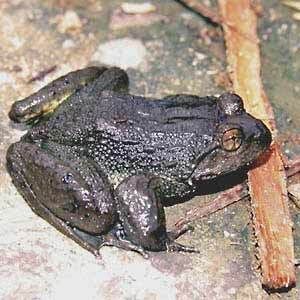
Frogs of the stream-dwelling Paa genus are among the most popular for hunting in China. But numbers in some areas have fallen 10-fold as a result of over-exploitation.

These frogs could be candidates for sustainable harvesting plans, where hunting is allowed but controlled. Image: Kadoorie Farm & Botanic Garden – KFBG

Rana chensinensis is declining steeply in some areas; a study in Heilongjiang found that the annual catch fell by 99% between 1971 and 1986. The main reason is traditional medicine.

Oil made from the female frog's oviduct is believed to be a tonic to the kidneys and lungs, and to cure respiratory ailments. Image: KFBG

Frogs and toads are also sold as tonics in the markets of Peru.

This stallholder in Cuzco sells "Extracto de Rana", a drink made from the extract of two to three frogs, which is blended with honey, malt and other ingredients.

Other recipes call for 30 frogs in a single drink. Image: Esteban Lavilla

In western Brazil and eastern Peru, frogs of the Phyllomedusa genus are used as a hallucinogen.

Chemicals secreted by the frog's skin and introduced into a human's bloodstream are said to lead initially to vomiting and incontinence, then deep sleep, and finally a period of enhanced sensitivity in sight and hearing. Image: E. Lavilla

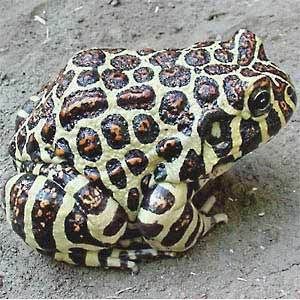
Leptodactylus laticeps is exported from South America to the developed world. It can fetch prices of 600 euros in European pet shops.

In some areas where it lives, in Argentina, Bolivia and Paraguay, people earn as little as 1,200 euros in a single year, giving them a real incentive to catch and sell it. Image: E. Lavilla

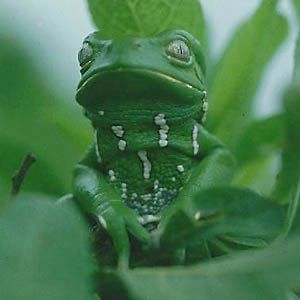
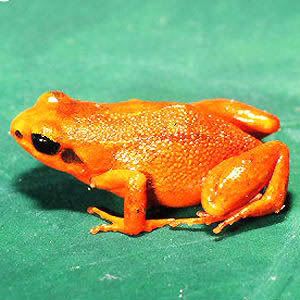
Mantellas are among the most popular frogs as pets. The principal source is Madagascar, from where many amphibians are exported into the pet trade.

This species, the black-eared mantella (Mantella milotympanum), is critically endangered. Habitat loss is also a major threat. Image: Franco Andreone/ARKive

Source: BBC
READ MORE - Frog populations not helped by dinner menus

Wednesday, January 21, 2009

Rabbid Rabbits?


Don't they look yummy?

Found at Anna the Red's Bento Factory, where you can also find instructions for sushi and creative bento ideas.
READ MORE - Rabbid Rabbits?

Monday, November 24, 2008

Don't Stuff Your Pet like the Turkey

The holiday season is a time when most people indulge in the delights of the season: eggnog, pumpkin pie, turkey, stuffing and gravy.

Too often, owners and their friends want to share their food with the family pets, not realizing the dangers that exist in such behavior beyond unhealthy weight gain.

A very timely article from Petside: Don't Stuff Your Pet Like the Turkey! discusses some of the pitfalls of pets and the Holiday Season.
READ MORE - Don't Stuff Your Pet like the Turkey

Thursday, November 6, 2008

Happy Cows


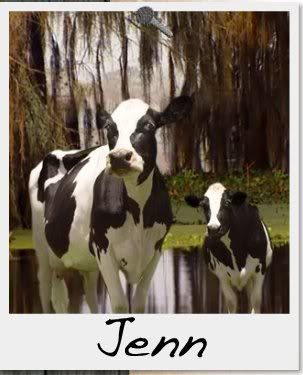
The California Milk Advisory Board and its ad agency, Deutsch/Los Angeles, have launched their most elaborate Happy Cow campaign yet.

The campaign's centerpiece is an "audition" process involving no fewer than 10 cows from around the world. Each cow is vying to become the California Milk Advisory Board's next Happy Cow, taking a place alongside previous Happy Cows Diane, Janice and Sadie.

You can look at the cows profiles and audition tapes by visiting realcaliforniamilk.com
READ MORE - Happy Cows

Monday, October 6, 2008

Butterfly cupcakes


There are many more cute & easy cupcake ideas at Martha Stewart Cutest Cupcakes
READ MORE - Butterfly cupcakes

Thursday, August 28, 2008

Rat meat demand grows in Cambodia

Reuters: The price of rat meat has quadrupled in Cambodia this year as inflation has put other meat beyond the reach of poor people, officials said on Wednesday.

With consumer price inflation at 37 percent according to the latest central bank estimate, demand has pushed a kilogram of rat meat up to around 5,000 riel ($1.28) from 1,200 riel last year.

Spicy field rat dishes with garlic thrown in have become particularly popular at a time when beef costs 20,000 riel a kg.

Hungry?
Here's a recipe for you:

Stewed Cane Rat
Skin and eviscerate the rat and split it lengthwise. Fry until brown in a mixture of butter and peanut oil. Cover with water, add tomatoes or tomato purée, hot red peppers, and salt. Simmer the rat until tender and serve with rice.
READ MORE - Rat meat demand grows in Cambodia

Wednesday, August 27, 2008

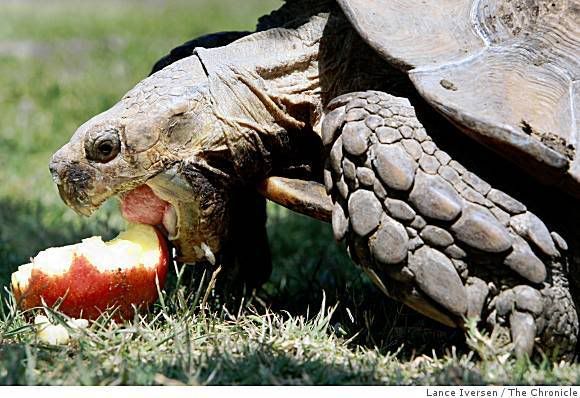
Yummy


Photo credit: Lance Iversen / The Chronicle
READ MORE - Yummy

Monday, August 18, 2008

But, what will the neighbors think?

Rising supermarket prices are persuading hundreds of families to turn their back gardens into mini-ranches stocked with miniature cattle.

Registrations of the most popular breed, the Dexter, have doubled since the millennium and websites are sprouting up offering “the world’s most efficient, cutest and tastiest cows”.

For between £200 and £2,000, people can buy a cow that stands no taller than a large German shepherd dog, gives 16 pints of milk a day that can be drunk unpasteurised, keeps the grass “mown” and will be a family pet for years before ending up in the freezer.

The Dexter, a mountain breed from Ireland, is perfect for cattle-keeping on a small scale, but other breeds are being artificially created to compete with it, including the Mini-Hereford and the Lowline Angus, which has been developed by the Australian government to stand no more than 39in high but produce 70% of the steak of a cow twice its size.

Source: Times OnLine

Photo: Fort Dodge Messenger, Dan Thompson/AP
READ MORE - But, what will the neighbors think?

Tuesday, August 12, 2008

PIG 05049

What happens to a pig after it has been slaughtered?

Of course, part of the animal is meant for consumption, but what happens to the rest?

Over three years, designer Christien Meindertma has investigated exactly what products are made from pigs. Her quest provided her with 187 products and led her to a tattoo artist, dentist, farmer and weapon specialist.

Beer, medicine, munitions, cardiac valves, brake discs and bubblegum: these are but a few products that contain parts, or sometimes minuscule particles, of a pig.

For the very first time an almost surgical dissection of one specific pig is exhibited: PIG 05049 is on display in the Kunsthal, Rotterdam, together with all the products that originate from it.

The presentation can be considered as the preamble to KunsthalKOOKT, Festival of Real Taste, to be held from 26 up to 28 September.

(via Scribal Terror)
READ MORE - PIG 05049