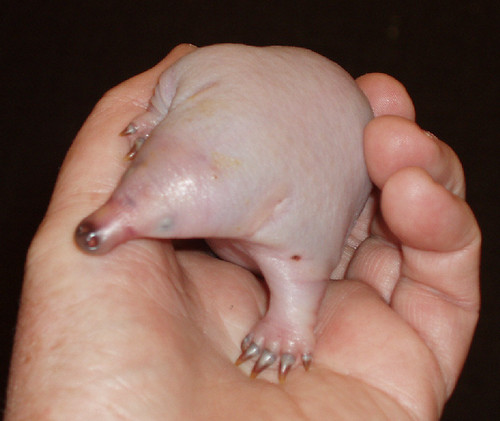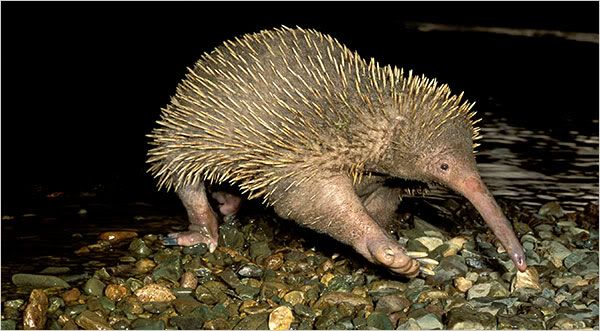
Here's a long-beaked echidna, one of the oldest, rarest, shyest, silliest-looking mammals on earth.
They lay leathery eggs, as reptiles do, but then feed the so-called puggles that hatch with milk — though drizzled out of glands in the chest rather than expressed through nippled teats, and sometimes so enriched with iron that it looks pink.
For reasons that remain mysterious, these monotremes have multiple sets of sex chromosomes, four or more parading pairs of XXs and XYs, or something else altogether: a few of those extra sex chromosomes look suspiciously birdlike.
Another avianlike feature is the cloaca, the single orifice through which an echidna or platypus voids waste, has sex and lays eggs, and by which the group gets its name. Yet through that uni-perforation, a male echnida can extrude a four-headed penis.
They are superior to humans at the other end of their bodies as well: Among humans, the neocortex that allows us to reason and remember accounts for 30 percent of the brain; in echidnas, that figure is 50 percent.
And while we're on the subject,
here's a short-nosed cousin:
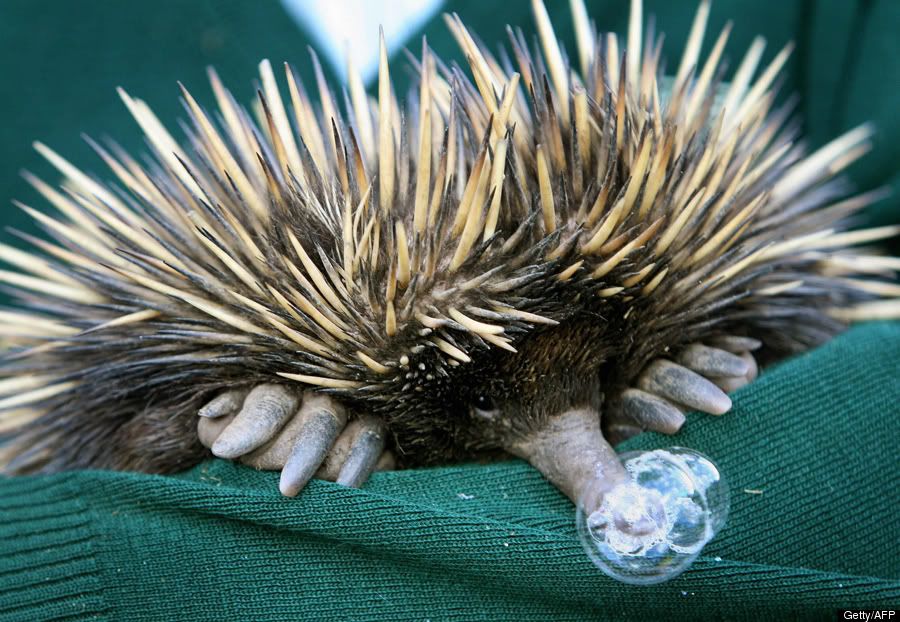
blowing a mucus bubble through his nose as he recovers at Taronga Zoo's wildlife clinic in Sydney from injuries received during a road accident.
AFP PHOTO/Greg WOOD
Source
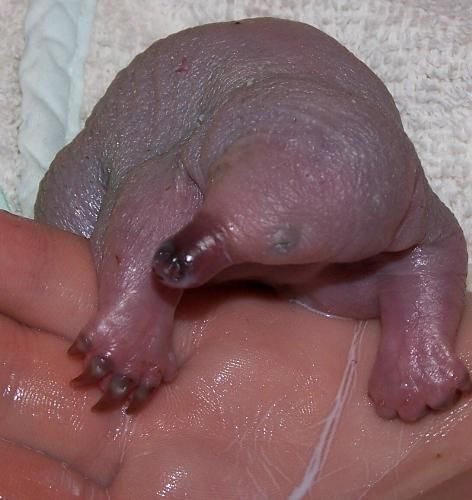
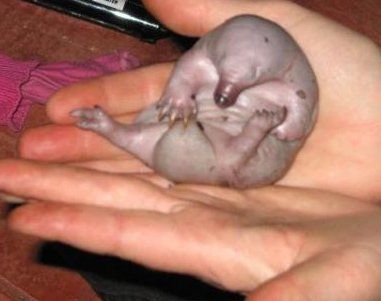 A baby echidna is called a 'puggle'.